

2026/09/17 Back
 The 2025 Harbin Asian Winter Games, currently being held in Harbin, is the most closely watched event at the moment.
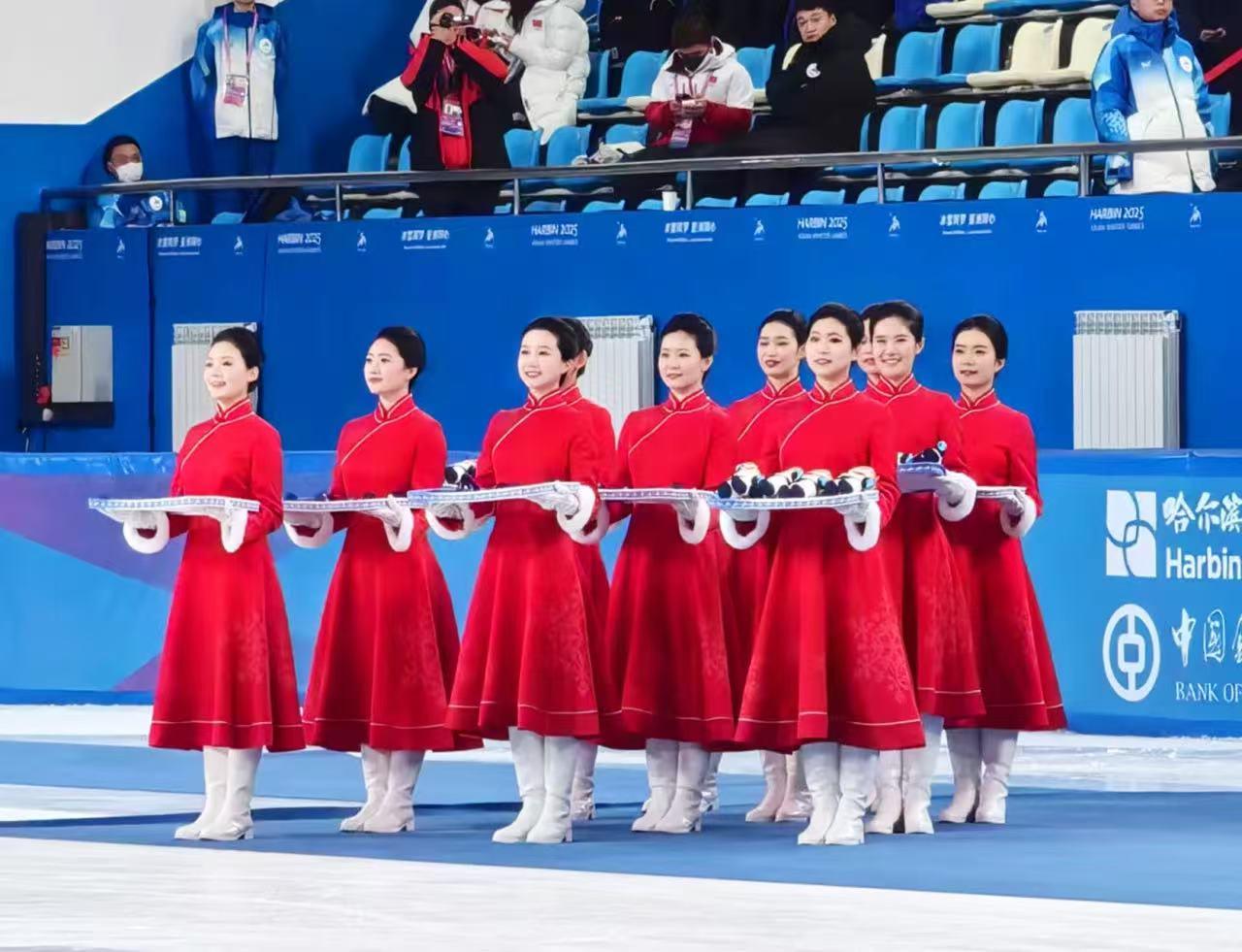
Have you, watching the competition in front of the TV, noticed the award ceremony dresses at this Asian Winter Games?
Today (February 9), a Trend News reporter learned that the fabric for the award ceremony dresses, designed with the theme of "Auspicious Snow Brings Victory," was created by the Zhejiang enterprise Wensli. This is also another time that Wensli has provided customized silk dress fabric craftsmanship services for a top international event, following the 2008 Beijing Olympics, the 2016 G20 Hangzhou Summit, and the 2022 Hangzhou Asian Games.
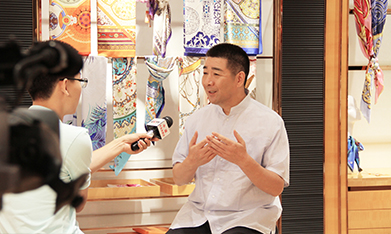
"We are a fabric manufacturer. The design of this award ceremony ceremonial dress is themed 'Auspicious Snow Brings Victory.' The design concept focuses on ice and snow cultural elements and the red tones of the national flag, with snowflakes and the flag complementing each other like a painting," introduced a relevant person in charge at Wensli.
After receiving the task, Wensli immediately formed a special working group to conduct in-depth discussions on the high-standard presentation of fabric performance, patterns, and color management.
In order to demonstrate the highest level of fabric and submit to the world a "silk answer sheet" that integrates Eastern aesthetics with a green future, Wensli tried using 6A-grade high-quality mulberry silk and 80-count Australian wool to create a silk-wool fabric. The ratio of 45% mulberry silk to 55% wool makes the fabric both skin-friendly and warm. Chinese silk and the charm of ice and snow complement each other and integrate with each other, showcasing to the world "Asian style, Chinese grandeur, and the charm of the Ice City."
The award ceremony dress fabric uses a large area of red. In the process of dyeing silk-wool fabric red, problems such as color bleeding and low color fastness are prone to occur. This is a common pain point in the textile industry. Through its self-developed artificial intelligence color management system, Wensli conducts digital intelligent calculations on drawing colors, obtains color parameters, and then performs precise color mixing, controlling printing errors at the micron level.
"How can precise colors be printed on silk? We use an artificial intelligence color management system. With AI empowerment, there is no need to adjust colors over and over again. The printed colors can restore the colors the designer wants, in one step, with almost no color difference. At present, the similarity between the colors displayed on the screen and the colors actually printed on the fabric has increased to more than 95%. In the past, traditional printing and dyeing required washing, which washed out excess color. Just this washing process alone produced a large amount of wastewater. Our GBART reactive waterless printing and dyeing technology, relying on artificial intelligence, can precisely calculate how much dye is needed for this ice-and-snow silk red, without a single extra drop," introduced the relevant person in charge.
"Silk is not only a cultural carrier, but should also be an important field of technological innovation," said Wensli. From the Beijing Olympics' "Blue and White Porcelain" to the Asian Winter Games' "Auspicious Snow Brings Victory," over 20 years, Wensli has always adhered to both craftsmanship and technology, letting the world see the infinite possibilities of traditional manufacturing transforming into China's intelligent manufacturing.