

2026/09/17 Back
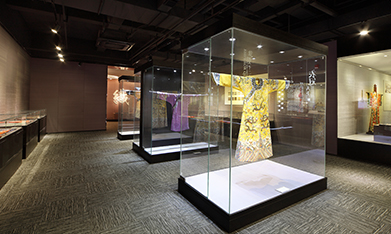
 On the ancient Silk Road, Chinese silk was renowned far and wide, carrying the splendor of Chinese civilization. There was a time when it was the magnificent attire of emperors and a cultural envoy, yet under the impact of modern chemical fibers and mechanical weaving, it once dimmed, and mulberry fields fell into neglect.
Today, golden cocoons have moved from the laboratory into mulberry fields, and golden silk brings new hope of prosperity to mulberry farmers. Biotechnology, AI design, green printing and dyeing... With technology and culture as its wings, Chinese silk, a traditional industry, has once again broken out of its cocoon and transformed into a butterfly, flying from rural mulberry fields to the global stage.
The Rise and Fall of Mulberry Fields: From Trough to Rebirth
In Xidong Village, Huabu Town, Kaihua County, Zhejiang Province, sericulture and silk reeling have long been the livelihood on which villagers depended. In the 1970s, income from silk enabled many families to build new houses, and scenes of "picking mulberry in fair weather and in rain" in the mulberry fields were picturesque.
In 2016, the price of white silkworm cocoons fell below the cost line of 15 yuan per jin. Young people went out to work, and mulberry fields fell into neglect. "At that time, the village was so quiet it made people uneasy. No one tended the mulberry trees, and the silkworm houses were empty," recalled Xu Yifeng, Party branch secretary of Xidong Village. This was the predicament of Xidong Village and also a microcosm of the national silk industry. Under globalization, cheap chemical fibers and mechanical production squeezed the market, and backward technology left mulberry fields silent.
The turning point began in 2017. Xu Yifeng met Tu Hongyan, Chairman of the Hangzhou Wensli Group, at a Zhejiang Provincial Women's Federation conference, and repeatedly promoted the potential of the village's 560 mu of mulberry fields. "Our village has raised silkworms for more than 40 years. Can you lead us to prosperity?" Xu Yifeng summoned the courage to say. In 2018, the "Golden Silkworm No. 1" golden cocoons bred by Wensli and Zhejiang University landed in Xidong Village, launching a large-scale breeding pilot. Relying on the "enterprise + economic cooperative + farmers" model, the enterprise provided technical training and guaranteed purchase, encouraging villagers to return home and start businesses.
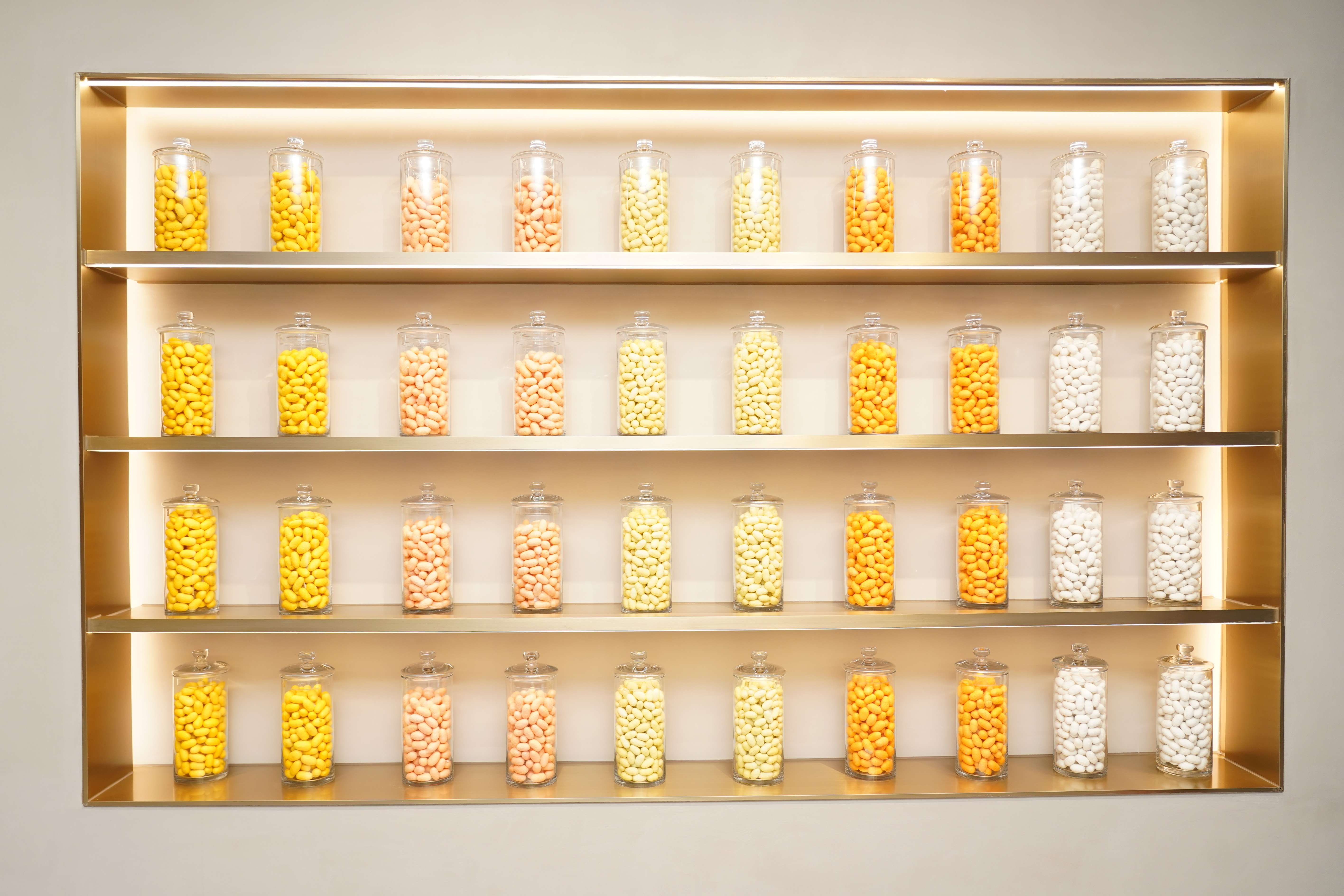
Golden cocoons are golden in color, require no dyeing, and have excellent antioxidant and antibacterial properties, making them suitable for high-end silk products. After the introduction of golden cocoons, villagers realized the dream of prosperity with "everyone having work to do and every household having income" at their doorstep. "Almost every household in the village grows mulberry and raises silkworms, achieving an average annual income increase of 30,000 yuan per household, and the village collective also has an annual income of 450,000 yuan," Xu Yifeng introduced.
"The first time I saw golden cocoons, the silk shone like golden threads. It was so beautiful!" Xu Yifeng said. "We made up our minds to make it the village's 'golden code.'" The village built a new small silkworm co-breeding room of more than 800 square meters and silkworm-raising greenhouses of more than 3,300 square meters, improving quality through mechanized management and precise temperature and humidity control. Golden cocoons are Xidong Village's lever for prosperity, and they also reflect the efforts of the national silk industry to move from trough to rebirth through variety improvement and technological innovation.
 Technology Empowerment: Reshaping the Industrial Chain
The success of golden cocoons is a microcosm of technological innovation. Innovative technologies such as biotechnology, artificial intelligence, and green printing and dyeing have injected vitality into Chinese silk. China's silk industry has shaken off the shackles of high pollution and low added value, moving toward high-end and green development.
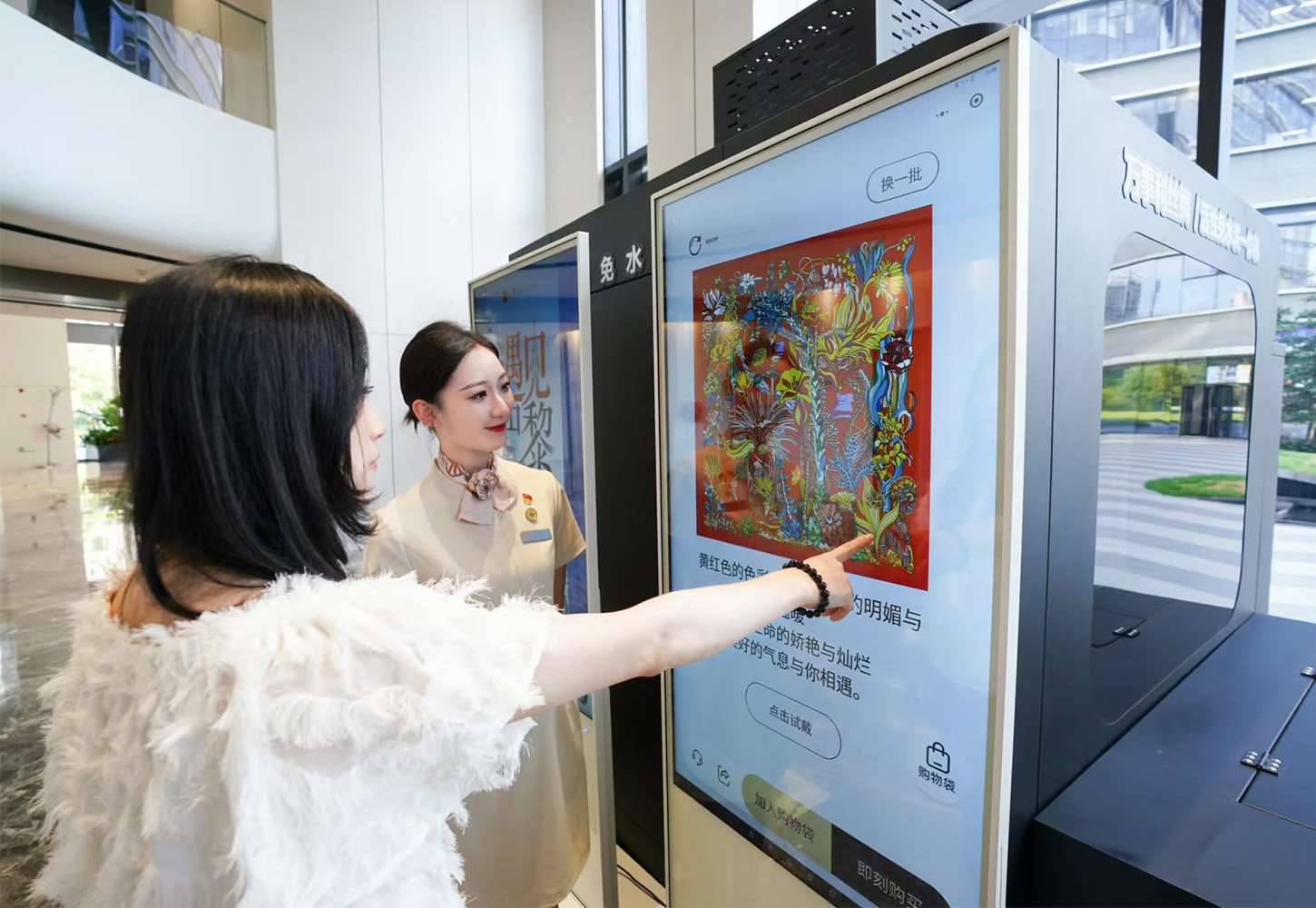
Wensli established its AIGC laboratory in 2021 and released the world's first vertical textile AI pattern large model in 2023, with a database of more than 700,000 patterns and more than 300 image algorithms, capable of realizing 10 to the 27th power kinds of creative expression—equivalent to being able to design 100,000 non-repeating silk scarves for each of the world's 8 billion people. "In the past, designing a pattern took 3 to 5 days. Now it is completed in seconds, and it can also meet personalized needs," said Ma Tingfang, Deputy General Manager of Hangzhou Wensli Silk Culture Co., Ltd.
Traditional printing and dyeing causes serious pollution, with a dye utilization rate of only 60%, and wastewater discharge has become a pain point. After eight years of research and development, Wensli developed the GBART waterless printing and dyeing all-in-one machine. Precise algorithms achieve a dye uptake rate and fiber binding rate of nearly 100%, eliminating the need for sizing and washing, and reducing wastewater discharge by 99%. "This machine condenses more than 10 processes, shortens the production process by 40%-50%, and can also handle fabrics such as cotton, linen, and wool, completely subverting traditional printing and dyeing," Ma Tingfang explained. "It turns printing and dyeing from a major polluter into a green benchmark, and can be used from small stores to large factories."
Wensli has also cooperated with Zhejiang University and the Hangzhou Institute of Medicine of the Chinese Academy of Sciences to extend the application of golden cocoons to the field of life and health, using them to improve cognitive function and resist sarcopenia. "Golden cocoons are not only woven into silk; they can also be 'eaten.' This opens up a new market," said Li Jianhua, Chairman of Hangzhou Wensli Silk Culture Co., Ltd.
China's sericulture industry is moving toward green ecology and innovative technology. Enterprises in Suzhou, Jiangsu use AI to optimize weaving, while Sichuan brocade uses digital modeling to reproduce traditional patterns; Shengze in Jiangsu promotes waterless dyeing, and Shaoxing in Zhejiang advances low-carbon processes; Shandong develops silk protein masks, and Huzhou in Zhejiang explores agricultural applications of sericulture by-products. AI empowerment, "dual carbon" transformation, and biotechnology are continuously expanding industrial boundaries and giving new vitality to traditional industries.
Culture and Global Vision: The Modern Charm of Silk
Silk is a calling card of Chinese culture, carrying thousands of years of wisdom. Wensli has cooperated with inheritors of Song brocade, Su embroidery, and Yunjin intangible cultural heritage to develop the fabric for the "Blue and White Porcelain" award ceremony dresses at the Beijing Olympics and silk national gifts for the G20 Hangzhou Summit. It has also launched cultural and creative products through cross-boundary cooperation with the Palace Museum and participated in the Paris Olympics to showcase Chinese elegance. "Silk is not just fabric; it is also a cultural symbol, carrying people's yearning for a better life," Tu Hongyan said.
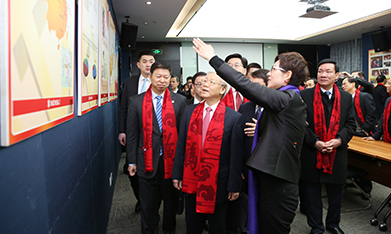
Reviving the Silk Road requires opening up the international market. Wensli planned the "Hangzhou Silk Journey," inviting owners of famous European silk brand enterprises to visit, deepening international peers' understanding of China's silk industry, and facilitating cooperation. The efficient and environmentally friendly GBART waterless printing and dyeing all-in-one machine is favored by foreign silk enterprises and has been sold to France and Italy. "Forty years ago, we learned Western technology. Now our equipment makes them look at us with new eyes," Li Jianhua said.
The golden cocoons of Xidong Village in Kaihua are only a microcosm of the revival of Chinese silk. Variety improvement has restored vitality to mulberry fields and accelerated rural revitalization; technological innovation has bid farewell to pollution and moved toward high-end development; cultural empowerment carries Chinese aesthetics to the world. More and more Chinese brands and products are welcomed by overseas markets; more and more Chinese enterprises and technologies are winning recognition and respect, attracting more investment and cooperation.
"Silk has been passed down for 5,000 years, relying on innovation that keeps pace with the times," Li Jianhua said. From the ancient Silk Road to the modern global market, Chinese silk, with innovation as its foundation and culture as its wings, has broken out of its cocoon and transformed into a butterfly, flying toward a vast world.
- 上一篇: China Securities Journal: Old Silk Tree Sprouts New Technological Shoots — Wensli Uses AI and Culture to Unlock the Value of Traditional Industries
- 下一篇:CHAO News: Asian Winter Games Award Ceremony Dress Fabric Comes from Zhejiang's Wensli, with AI Technology Used in Color Mixing and Printing and Dyeing